
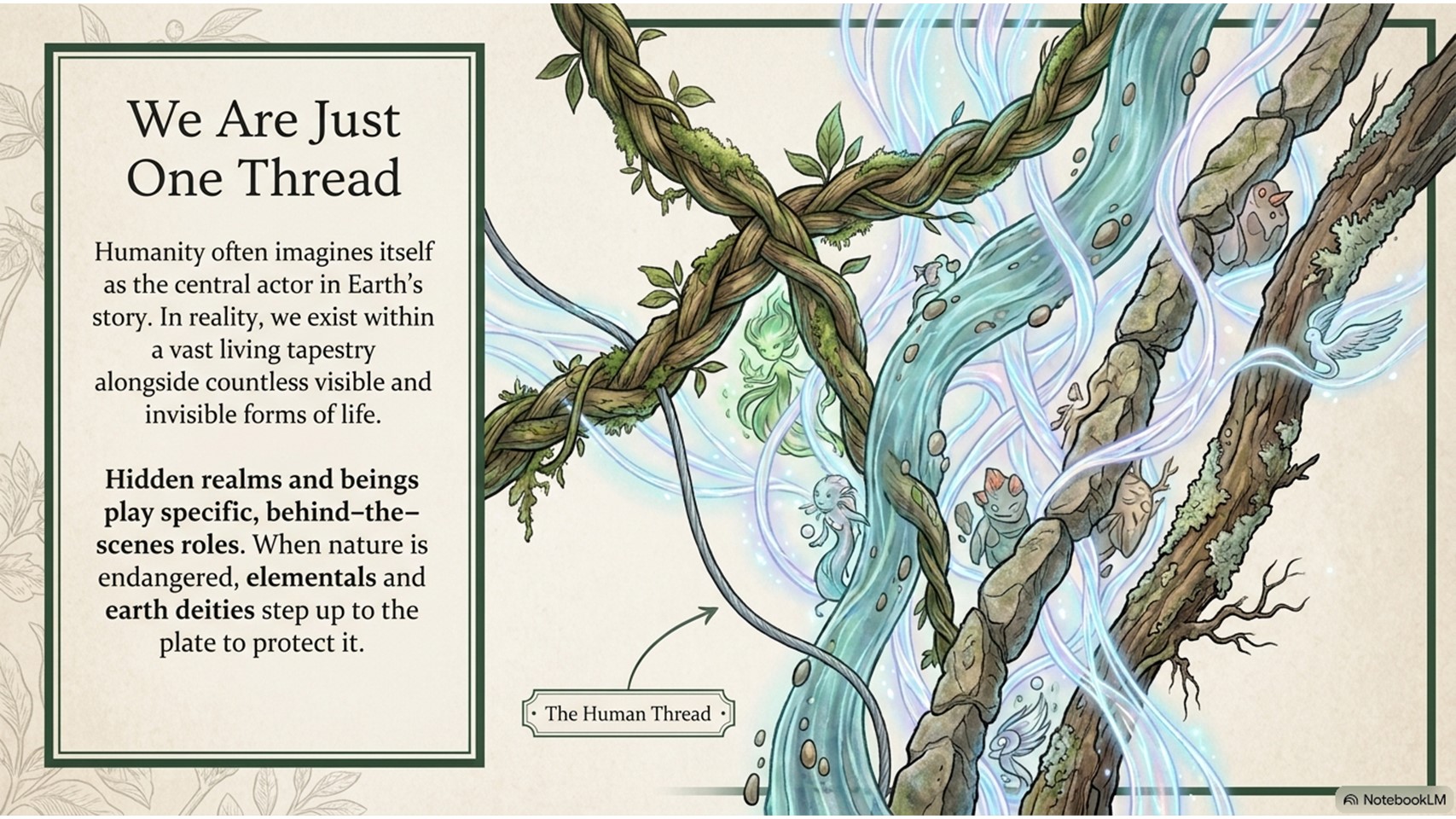
Mother Earth, or as we lovingly refer to her, Gaia, is in transition, as are its inhabitants. Humanity often imagines itself to be the central actor in Earth’s story. Yet we are only one thread in a vast living tapestry that includes countless visible and invisible forms of life. There are hidden realms and beings that play many behind-the-scene parts—each with its own specialty. When nature is endangered and disrespected, the elementals, nature spirits, and earth deities step up to the plate—which explains the renewed interest in guardian spirits as they come closer and more visible.
Whether interpreted spiritually, psychologically, or symbolically, many people report a renewed sensitivity to nature. More time spent outdoors, growing environmental awareness, and increasing interest in indigenous traditions have encouraged people to look at forests, rivers, and mountains differently than previous generations.
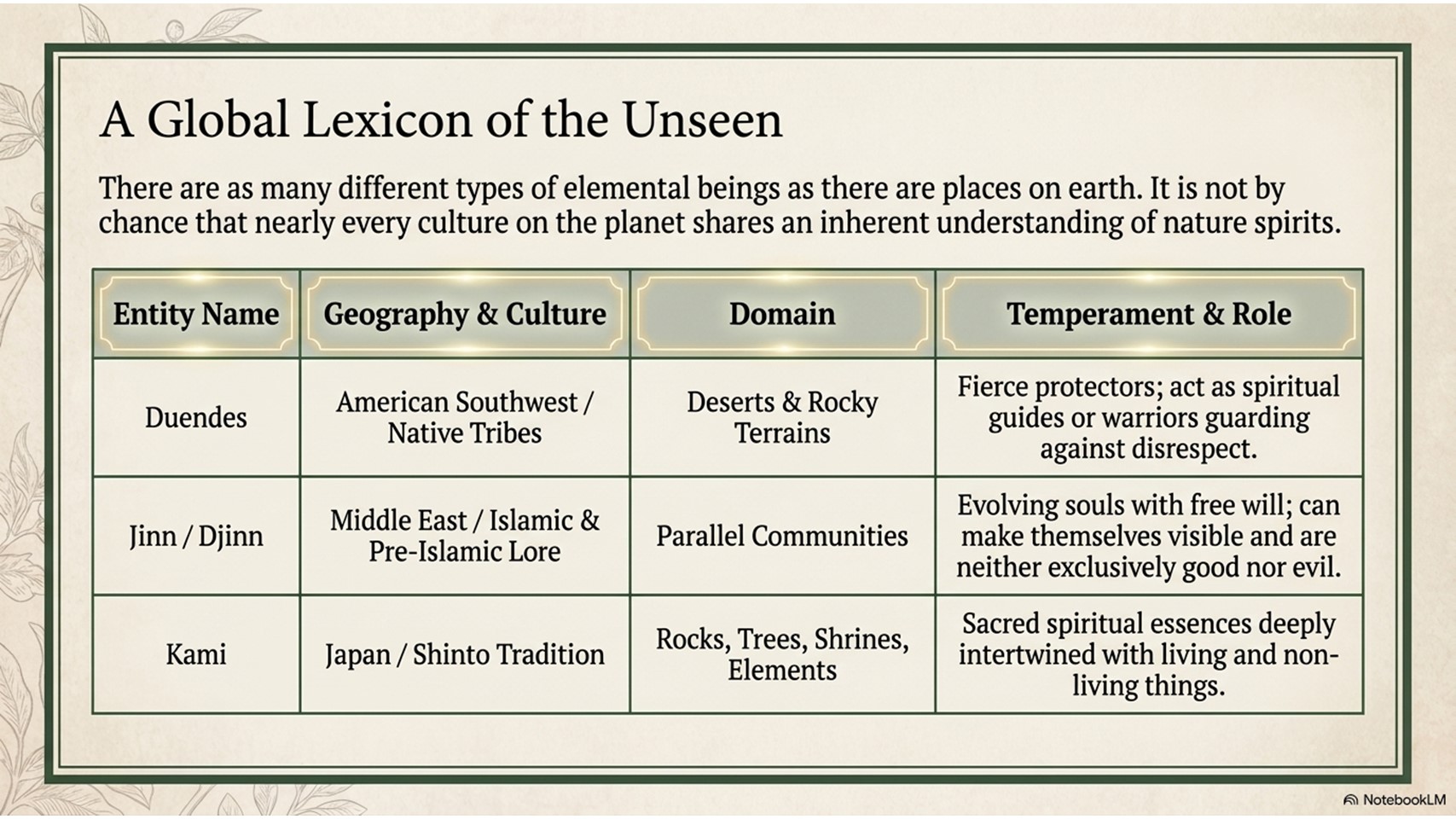
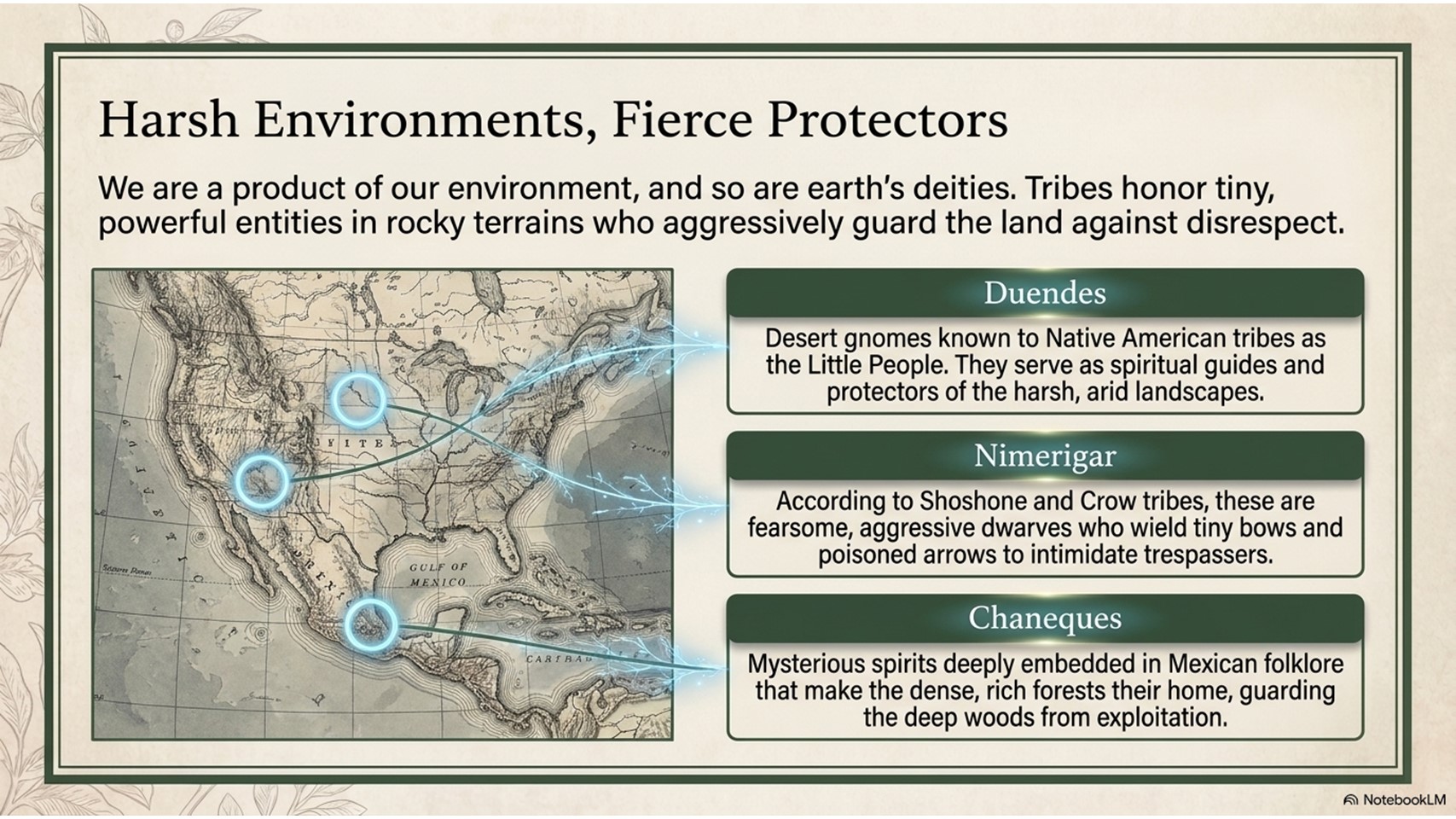
There are as many different types and groups of elemental beings as there are places on earth. This makes sense because each category of nature spirits has a unique job to do, in the locale to which it is attached. This explains why The Fae are found predominately in England, Scotland, Ireland and Germany. While the Chaneques, the ‘Mysterious Spirits of Mexico’ make the forests of Veracruz their home. The tiny and elusive spirits that protect and nurture these diverse environments are as different as the landscapes they call home. However, their commitment to protecting and preserving the natural world is the same. Mostly invisible to humans, they work behind the scenes, often mischievously, to guard the land against those who do not respect it. So, it is not by chance that there are unlimited stories, myths, and actual accounts regarding human encounters with these tiny and elusive spirits.
In the American Southwest, Duendes are desert gnomes described by numerous Native American tribes as the Little People. In fact, most tribes have intricate relationships with nature spirits. The Great Plains tribes, such as the Comanche and Cherokee honor tiny, powerful people living in mountainous and rocky terrains. They see them as fierce warriors or spiritual guides who can manipulate their surroundings. Further west, the Shoshone and Crow tribes speak of the Nimerigar, fearsome and aggressive dwarves, that intimidate those that cross them with tiny bows and poisoned arrows. Harsh environments are home to tough spirits and tough humans. This makes sense, of course, since we are all in some way, a product of our environment. We mostly share our physical world with those spirits we can see: flowers, trees, animals, stones, water, mountains, the sun and planets. Yet, there is an underlying magic to nature and we can connect deeply with fae, elves, devas, ancestors, land spirits and more through our intuition.
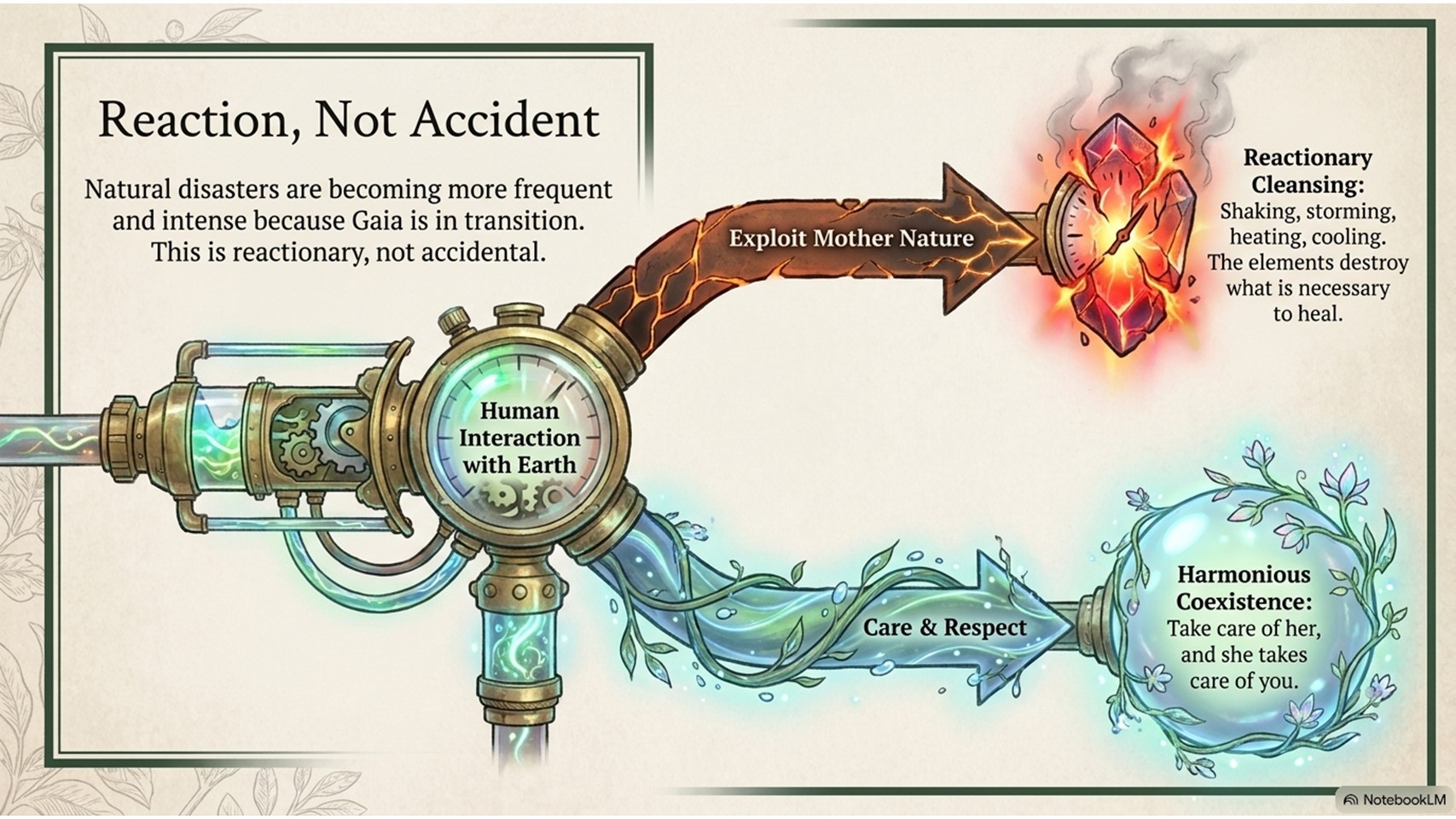
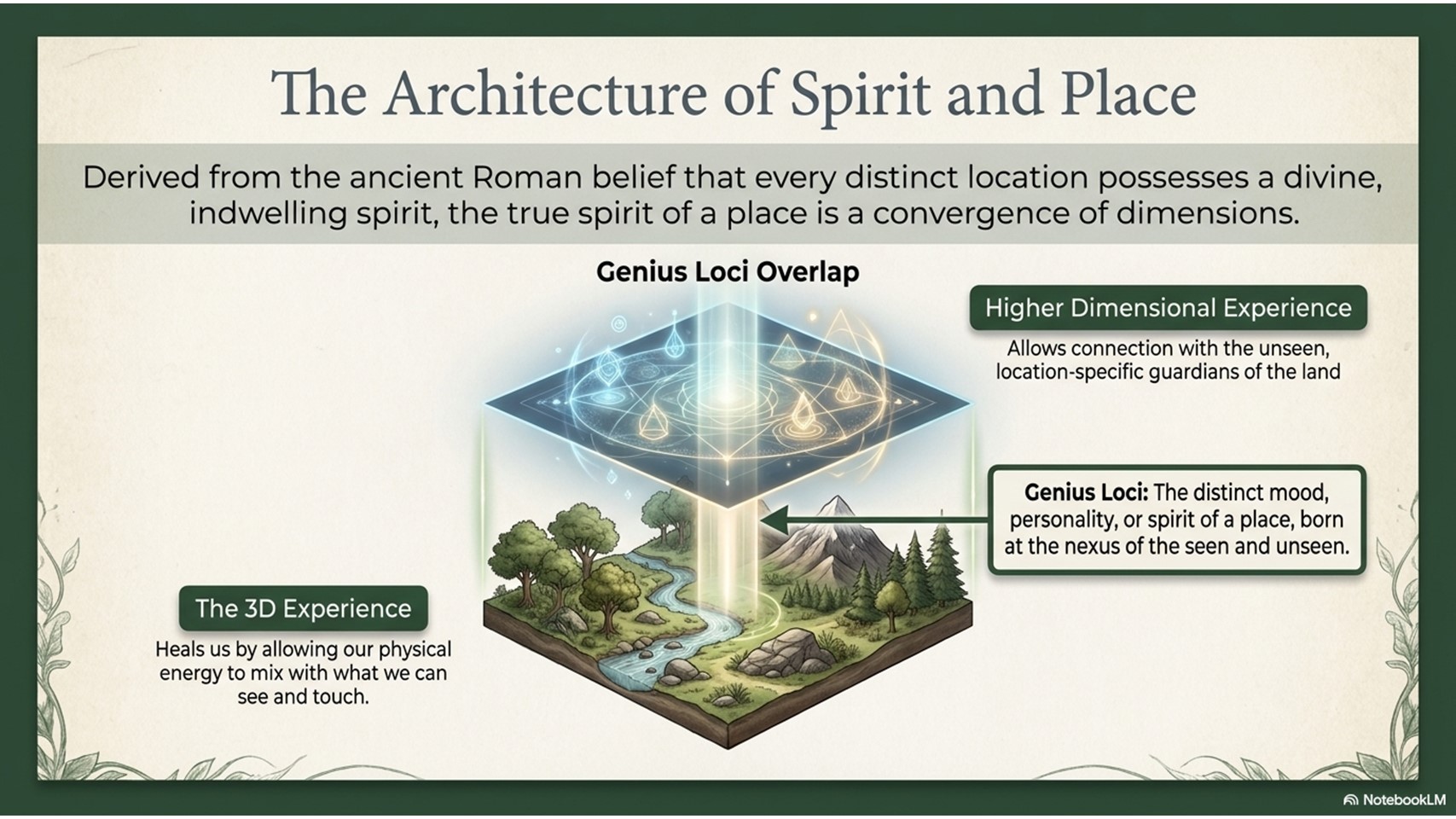
The 3D experience of connecting with nature heals us by allowing our energy to mix with what we can see and touch. Higher dimensional experiences allow us to connect with the unseen, but it must be done with respect and understanding or Gaia will react, sometimes violently. The fact that, natural disasters are becoming more frequent and intense is not accidental, but reactionary. Take care of Mother Nature and she will take care of you. Exploit her, and she becomes destructive. That is until we come to our senses and embrace the spirits that hide within trees, grasses, rocks, streams and rivers—to mention a few.
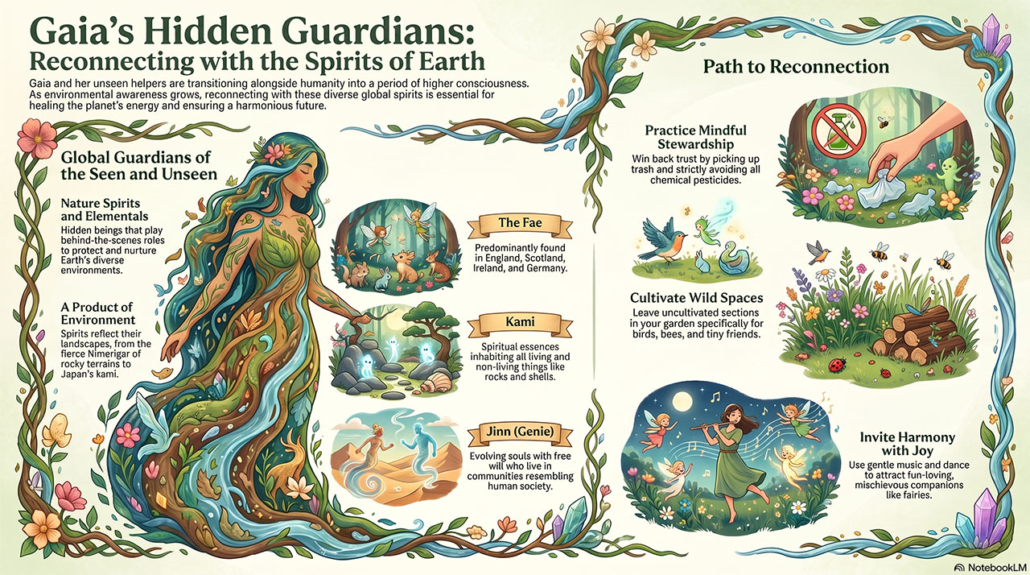
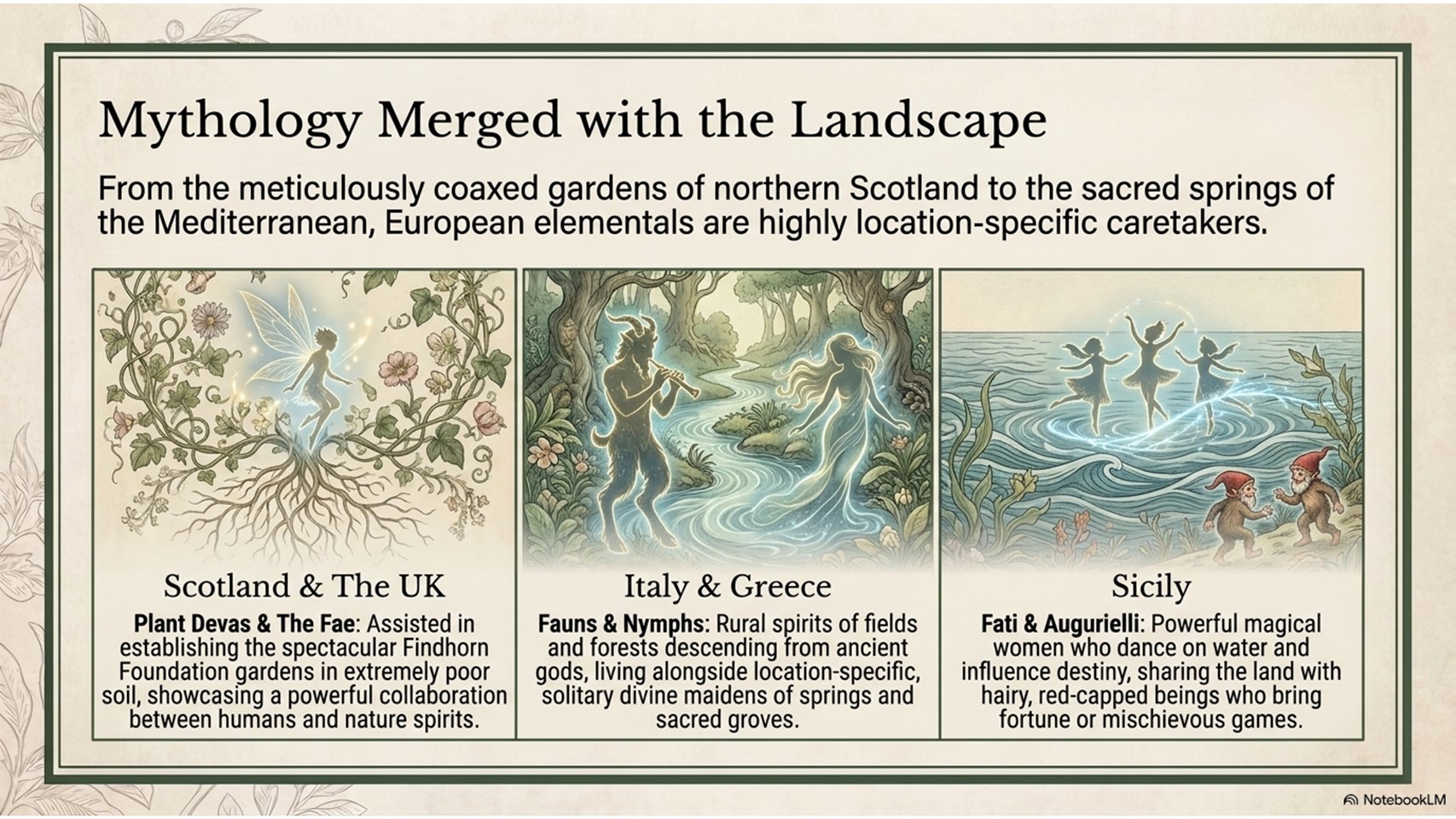
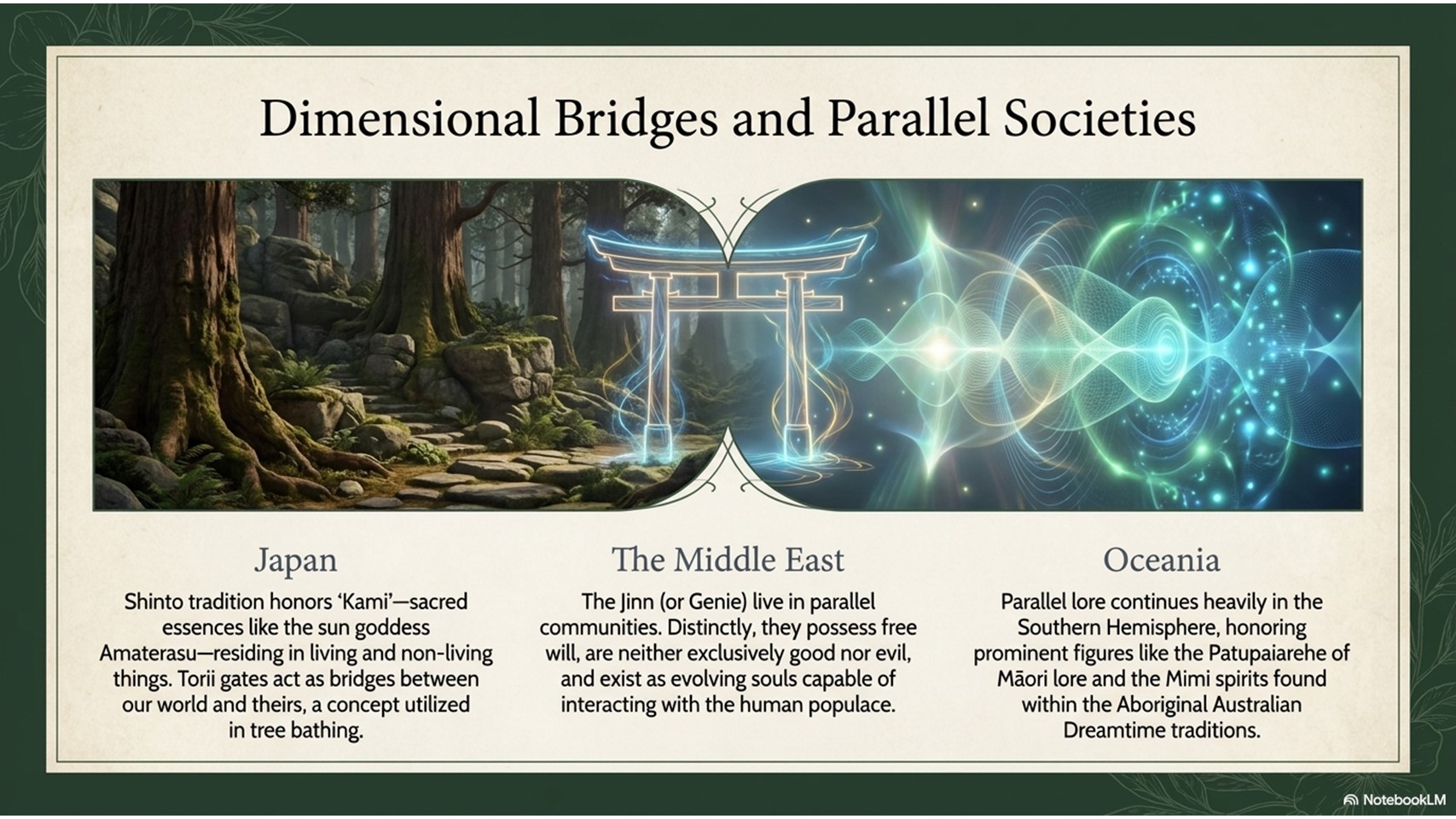
So, rather than describe in detail the endless list of earth’s deities, let’s look at the world and see how the earth’s energies can be calmed through our re-connection with place. Prior to WWII, Shinto was considered the national religion of Japan. Shinto has Buddhist influences and embraces the belief that nature is sacred, and is embodied in spiritual essences (similar to fairies), they call ‘kami’. Many public and domestic Japanese shrines, honor Amaterasu, a sun goddess. She, as many kami do, resides in a parallel dimension. It is not unusual to find a torii gate, (a traditional Japanese architectural structure commonly found in Shinto shrines), connecting our world with those of the kami. These magical beings inhabit all living and non-living things such as rocks, stones, and shells. This, once again, demonstrates the close ties between the seen and unseen. The Japanese art of “tree bathing” is a well-known practice creating peace and tranquility for those that submerge themselves in forests. In Buddhist belief, earthly spirits, gods, and goddesses are called devas. This term, is shared with Hinduism and is connected to the work at the Findhorn Foundation in northern Scotland, where plant devas helped establish the spectacular gardens, in extremely poor soil.
Modern day architects, often use the term ‘genius loci’ to describe the distinct mood, personality or spirit of a place. This idea is derived from an ancient Roman belief that every distinct location possesses a divine, indwelling spirit. Italians today, continue to see ‘Fauns (Fauni) as rural spirits of the fields and forests descended from the god ‘Faunus’. Greek and Roman mythology often blends Fauns with Greek satyrs, which are envisioned as wild, half-goat men inhabiting the wooded uplands. In both cultures, Nymphs (Ninfe) are location specific, solitary divine maidens of springs, rivers, and sacred groves. In Sicily the Fati (Fates) are powerful and magical fairy-like women that dance on water and can influence human destiny. Then there are the mischievous Augurielli—hairy little beings, with a fondness for small red caps, who can bring fortune to a home if treated well—cross them and watch the games begin!
In the Middle East Jinn/Djinn or Genie appears in the Qur’an and in literature such as “The Thousand and One Nights”. These invisible fey-types, live in communities that resemble those of the general populace, and can make themselves visible to humans. Like humans, they have free will, and are neither good nor evil, but are evolving souls. The Qur’an differs from the Christian Bible in that it states that Satan is not a fallen angel, but a Jinn. Evil Jinns are feared because of their ability to possess human beings, and Muslims have protective prayers to ward them off. The Jewish culture has its share of fairy stories as well, mostly centered around morality and appreciation of the natural world.
In New Zealand and Australia, prominent figures like the Patupaiarehe are part of Māori lore and Mimi Spirits are found in Aboriginal Australian dreamtime traditions. The African continent hosts a wide variety of fairy-like beings and elementals that inhabit anthills, trees, water, and forests—most of which are considered help-mates to humans. In fact, there are very few places on earth where nature spirits are not part of cultural beliefs—coincidence?
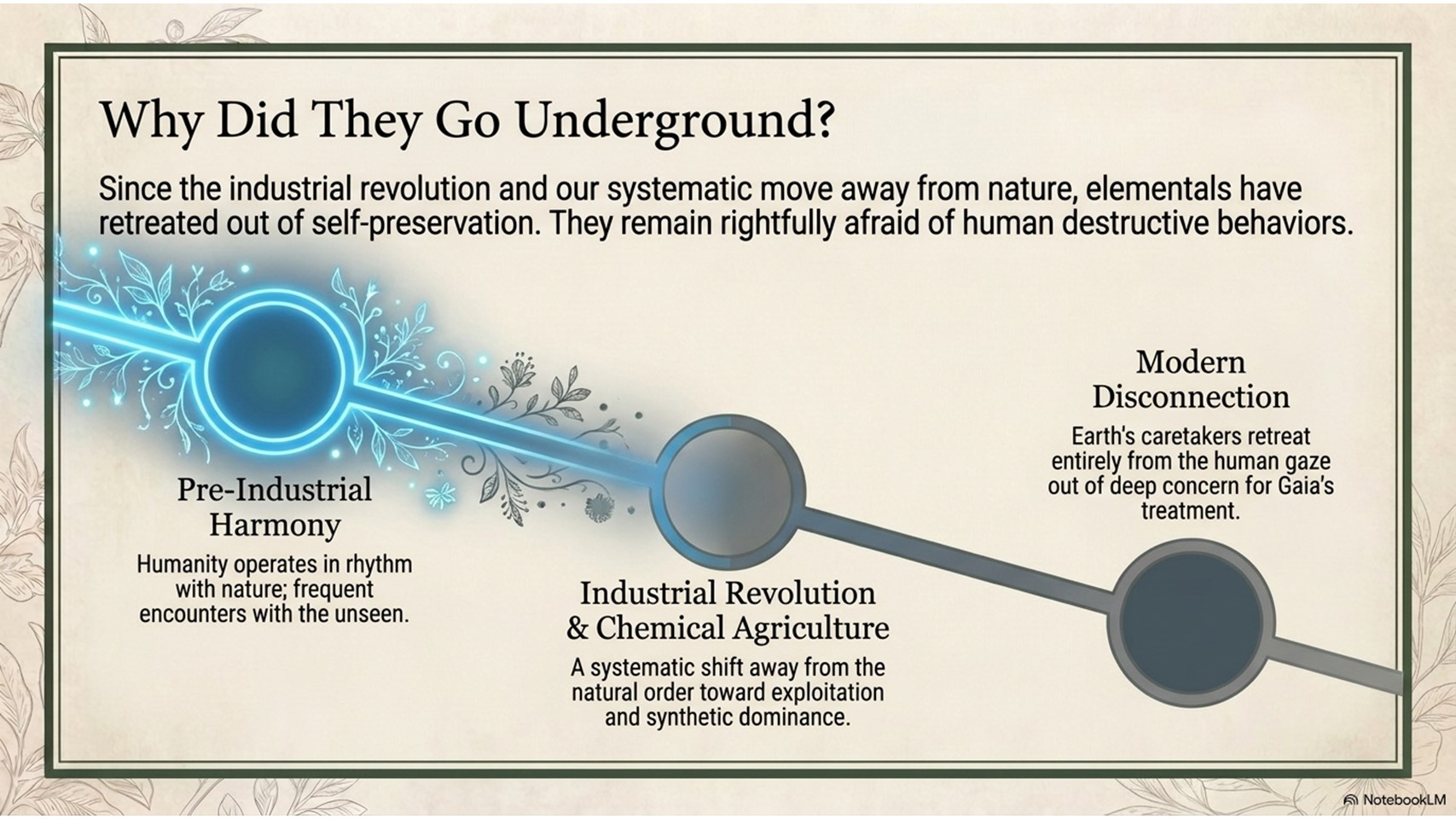
So, how can we experience nature in such a way that includes these unseen worlds? Since the industrial revolution and humankind’s move away from nature, these beings have for lack of another word, gone underground—seen and felt less and less. They are concerned with how Gaia has been treated and are afraid of human destructive behaviors. However, as we focus on more natural reconnections with nature, spiritual encounters are becoming more commonplace.
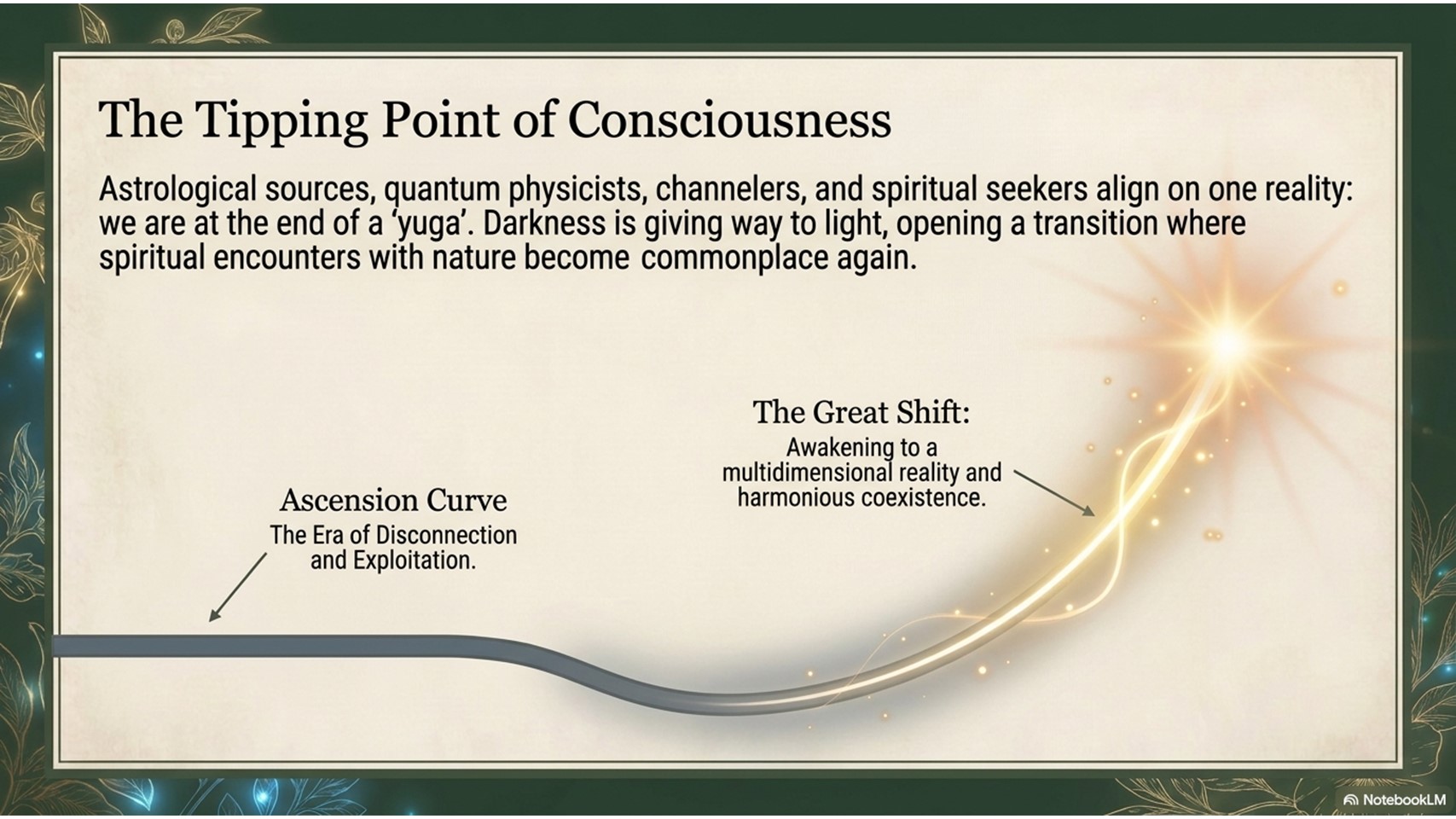
There is a great deal of online and in-person discussion surrounding humankind’s ascension into higher realms. Diverse viewpoints come from astrological sources, religious leaders, spiritual seekers, and quantum physics scientists. There are channelers that say they have connected with other advanced planetary civilizations, angels, and saints that are offering their assistance in this transition period to higher consciousness. One thing that they all agree on, is that we have free will—our choices are our own. There does seem to be a shift in perspective as large groups of people are seeing and understanding that these chaotic times will pass—opening and transitioning to a more harmonious world.
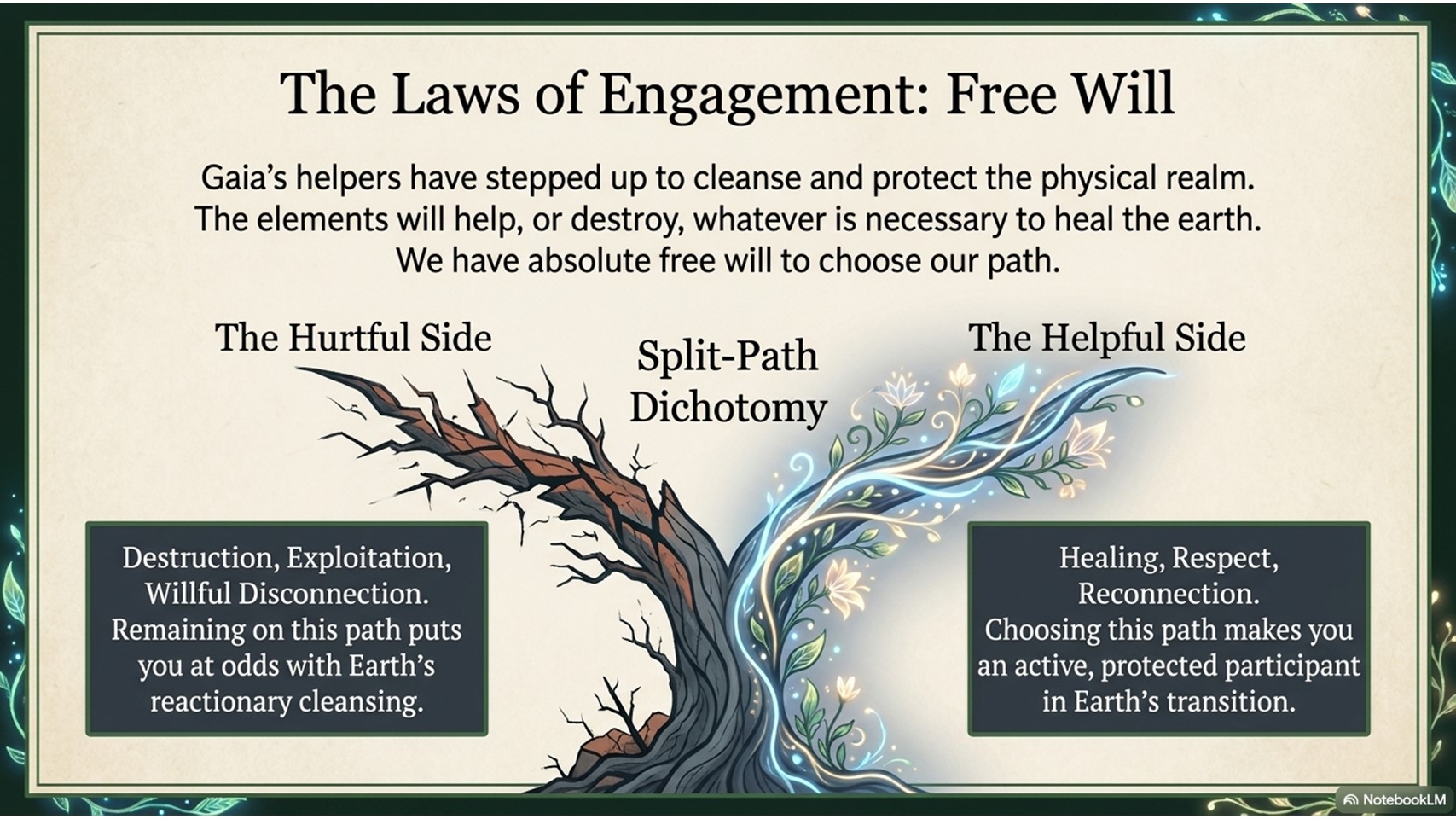
It is in this transitory period that Gaia and her helpers have stepped up to task, to cleanse and protect the physical. Gaia has been shaking, exploding, storming, heating, cooling and resetting her energy fields. The beings we’re talking about are part of her, as are the animals, plants, water, air, wind and fire. Each of the elements has its own spirits which help and sometimes destroy what is necessary to heal the earth and its inhabitants. We can either be on the helpful side or hurtful side—again free choice.
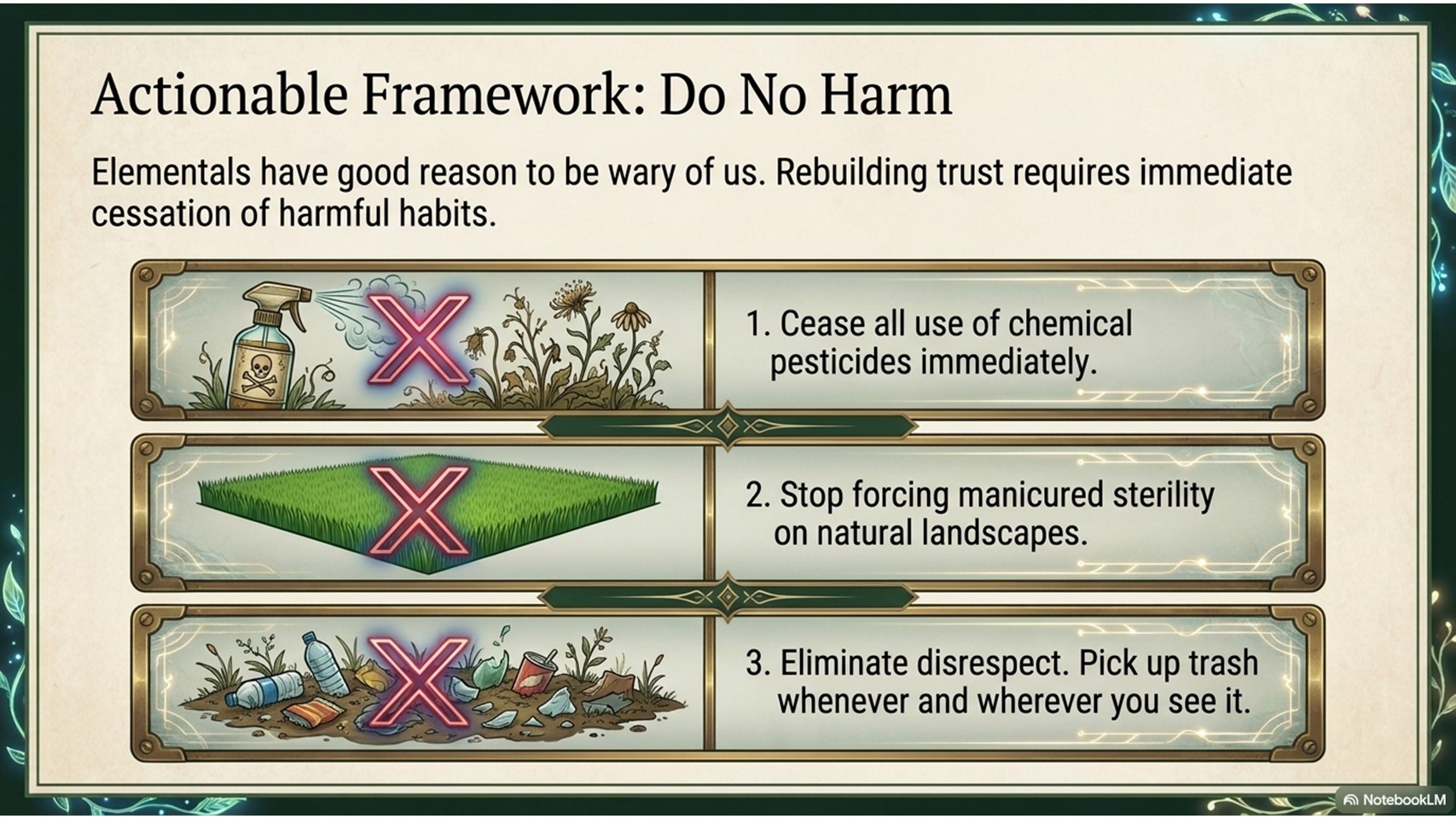
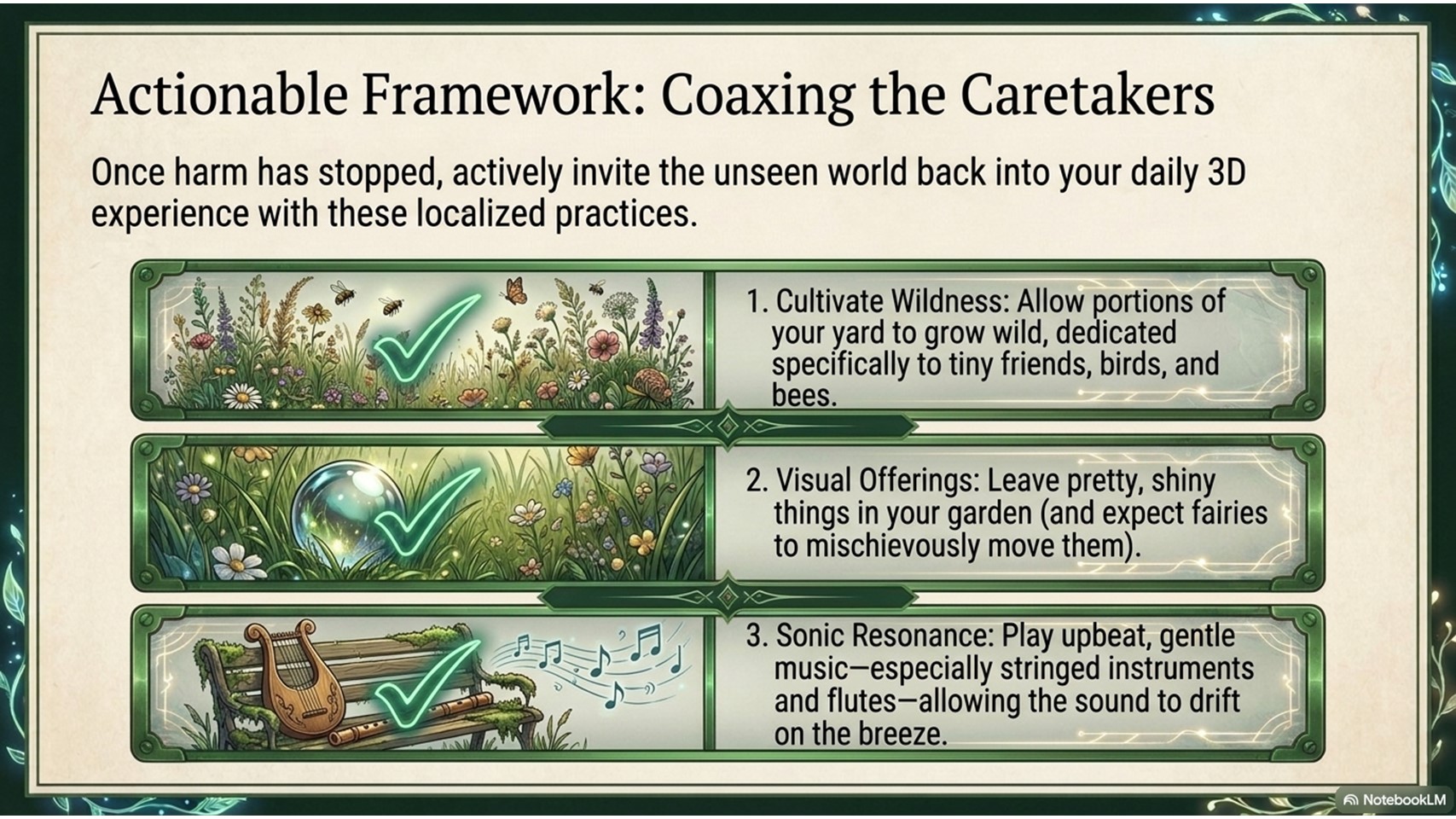
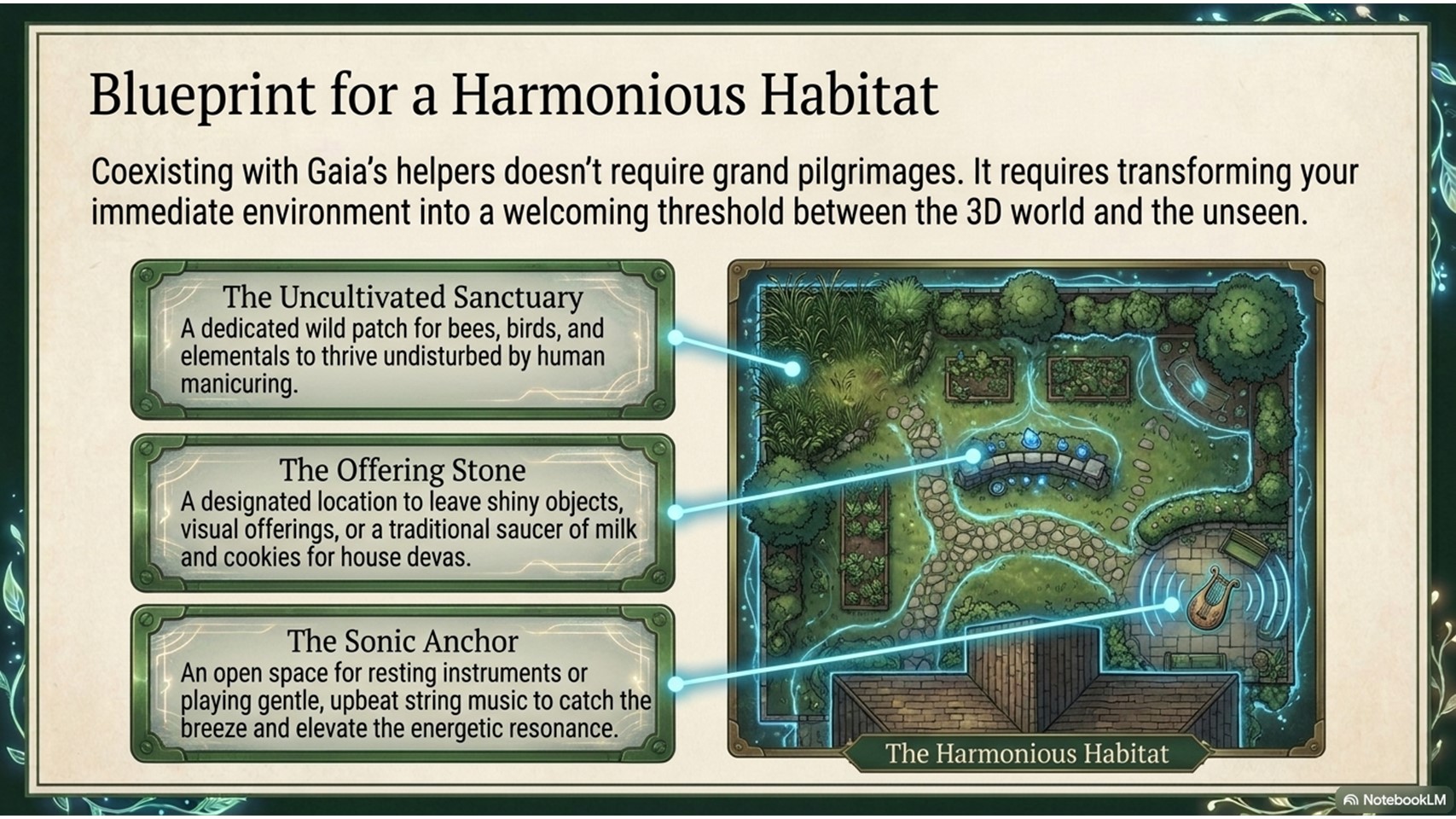
So how do we coax the earth’s caretakers out of hiding? They have good reason to be wary of us and our destructive ways. What can we do to win their trust and enjoy Gaia together? First of all, stop treating the earth with disrespect. Pick up trash whenever you see it. Leave pretty things in your yard and/or garden. Allow your yard to be a bit wild. In fact, it’s always a good idea to leave an uncultivated piece of your garden dedicated to your tiny friends, birds, and bees. Never use chemical pesticides. If talented play music, especially stringed and flute music—something that will drift in the breeze. Keep it upbeat, gentle and add some dance moves if you please. Fairies, in particular, are fun-loving mischievous companions, who will steal items and move them, hide them, then set them down in some other place, just to mess with your mind.
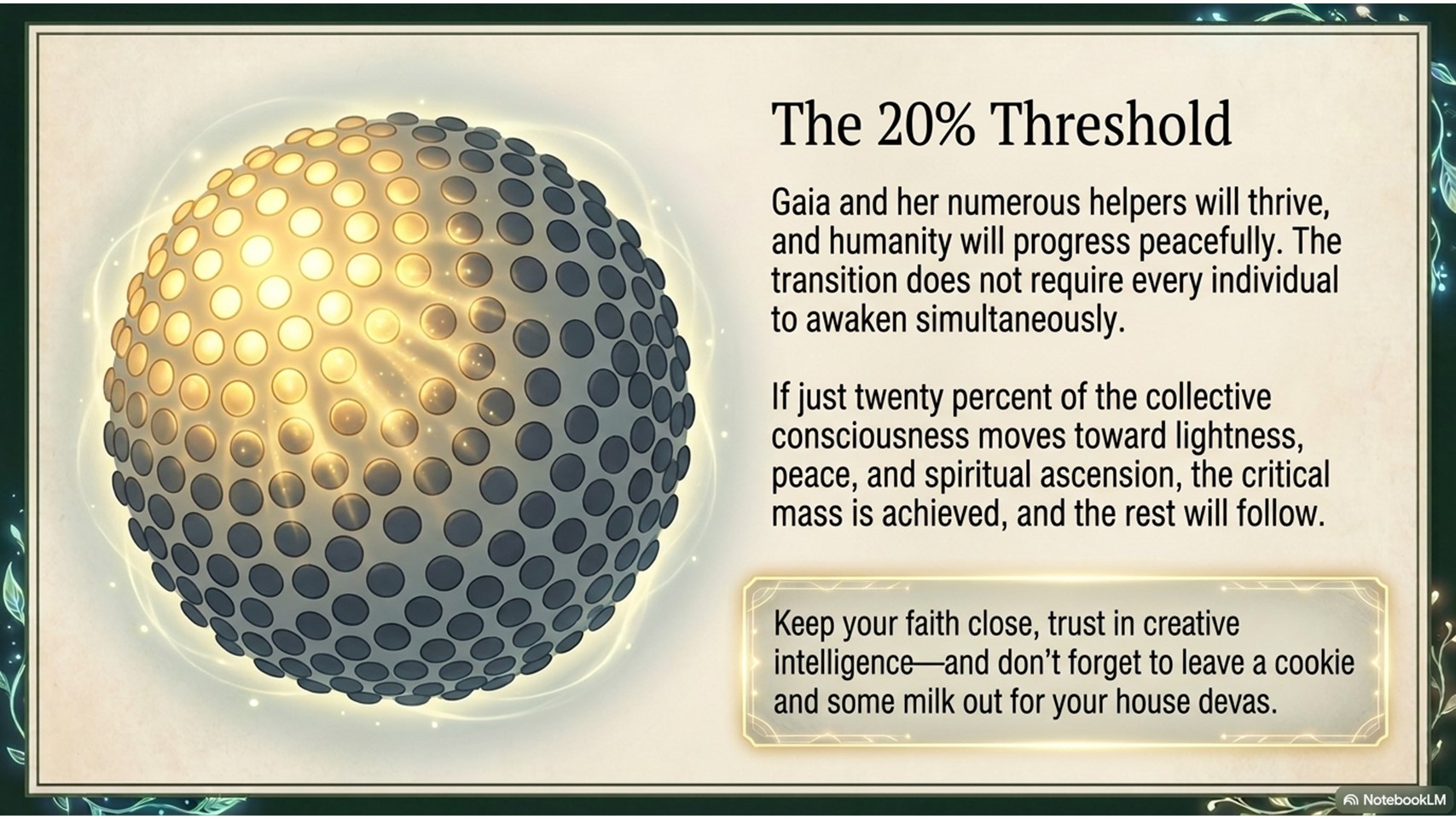
Bottom line is that Gaia and her numerous helpers will succeed and thrive. Humanity will heal and progress peacefully. Not everyone will be on board, but many feel that if twenty percent of the collective consciousness moves towards lightness, peace and spiritual ascension, that the rest will follow. Again, free will, karma, creative intelligence, and spiritual practices, will bring Gaia and all her inhabitants once again, into the light. Transition will be tough for a while, but the evil forces will eventually lose their power—it is the end of a yuga and darkness will give way to God’s light. Keep your faith close and don’t forget to leave a cookie and some milk out for your house devas.
